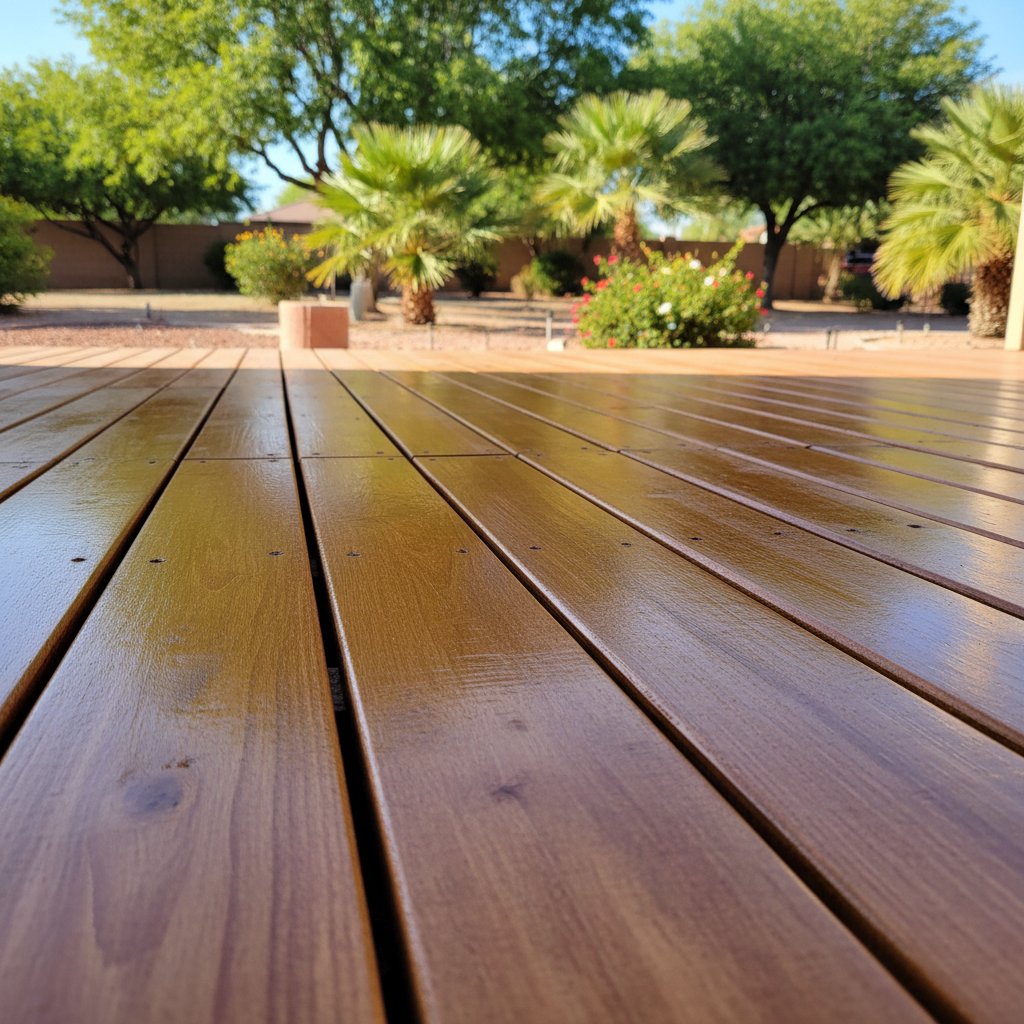
Should You Paint or Stain Your Deck?
Alright, let's talk decks. Specifically, what you're going to put on that wood to keep it looking good and lasting a long time here in Glendale. You've really got two main choices: paint or stain. They aren't the same thing, not by a long shot, and what you pick makes a huge difference.
Paint just sits right on top of the wood. It creates a solid, opaque layer, kind of like putting a heavy coat on your deck. It covers up the grain, hides any little imperfections, and you can get it in pretty much any color you can imagine. The good part? It offers fantastic protection from the sun's brutal UV rays we get here in Arizona, and it can totally transform the look of your backyard. The downside, though? It can chip, peel, and show wear much more obviously, especially in spots that get a lot of foot traffic or if the prep work wasn't perfect. When it starts to fail, you're usually looking at a big job of scraping and sanding.
Stain, on the other hand, actually soaks into the wood. It enhances the natural grain instead of covering it up. You'll find different types out there: clear, transparent, semi-transparent, and solid. Clear and transparent stains really let the wood's natural beauty shine through; they offer less UV protection but give a very organic look. Semi-transparent gives you a hint of color while still letting some grain show. Solid stains are almost like a thin paint; they cover most of the grain but still let some texture come through, and they offer excellent UV protection. The big benefit of stain is that it tends to wear away more gracefully than paint. When it's time to re-stain, you usually just need to clean the deck well and put another coat on. No heavy scraping required, typically. That's a huge time-saver down the road, believe me.
For most folks here in Glendale, especially with our intense sun, I usually suggest a good quality solid or semi-transparent stain. They give you that protection without the headache of peeling paint. Now, if you've got a beautiful cedar or redwood deck, a transparent or semi-transparent stain will truly make that grain pop.
Before You Start: The Prep Work is Everything
I cannot stress this enough: 80% of a successful deck painting or staining job comes down to the prep. If you cut corners here, you're just asking for trouble, and your beautiful new finish will fail way sooner than it should. Trust me, I've seen it a hundred times.
- Clean it right: First, sweep off all the loose stuff. Then, you'll need a good deck cleaner. You can find these at any hardware store, just follow the directions carefully. For really grimy decks, a pressure washer can be your best friend, but be careful! Too much pressure can actually damage the wood fibers. Keep the nozzle moving and don't get too close. You're trying to clean, not carve.
- Fix it up: Now's the time to replace any rotten boards, tighten loose screws, or hammer down popped nails. Fill any small cracks or holes with an exterior wood filler. Don't skip this step.
- Sand it smooth: This is where a lot of DIYers get lazy, but it's absolutely crucial. Sanding opens up the wood's pores, helping the stain soak in better or the paint stick properly. Start with a coarser grit (like 60 or 80) if your deck is really rough, then finish with a finer grit (100 or 120). Get rid of any old, peeling finish. If you're going from paint to stain, you'll need to strip all that old paint off, which is a massive undertaking.
- Rinse and dry: After sanding, rinse the deck thoroughly to remove all dust and cleaner residue. Then, and this is key, let it dry completely. I mean completely. In our Glendale heat, that might take a day or two, but don't rush it. Moisture trapped under your new finish is a recipe for peeling and mildew.
DIY or Call a Pro?
This is the million-dollar question, right? Can you do this yourself, or should you call someone like Glendale Custom Decks?
You can probably DIY if:
- Your deck is relatively small and in decent shape.
- You've got the time and patience for the prep work. Seriously, it's a grind.
- You're comfortable with a pressure washer and a sander.
- You're just doing a simple re-stain over an existing stain that's wearing evenly.
You should probably call a pro if:
- Your deck is huge, multi-level, or has intricate railings.
- It's in really rough shape – lots of rot, deep cracks, or extensive peeling paint.
- You're trying to switch from paint to stain (that stripping job is brutal).
- You don't have the tools, the time, or the desire to spend a weekend (or two) scrubbing, sanding, and bending over.
- You want a flawless, long-lasting finish and don't want to worry about missed spots or uneven application.
A good contractor, like us at Glendale Custom Decks, has the right equipment, the experience to know what products work best in our climate (especially with our dry air and intense sun), and the crew to get it done efficiently and correctly. We know how to handle the unique challenges of desert weather on wood, like the way our dry soil can affect wood movement over time.
During the Project: Application Tips
Whether you're DIYing or watching the pros, here are a few things to keep in mind:
- Check the weather: Don't apply stain or paint in direct, scorching sun, or if rain is expected. Early mornings or late afternoons are usually best here.
- Work in sections: Don't try to do the whole deck at once. Work with the boards, from one end to the other, to avoid lap marks.
- Thin, even coats: It's better to apply two thin coats than one thick one. This helps with penetration and prevents puddling.
- Read the label: Every product is different. Follow the manufacturer's instructions for drying times and re-coat windows.
After the Project: Maintenance Matters
You've put in the work, or paid someone good to do it. Now, protect that investment!
- Keep it clean: Sweep off leaves and debris regularly. A quick wash with a hose and a soft brush once or twice a year will do wonders.
- Inspect annually: Take a good look at your deck every spring or fall. Are there any areas showing wear? Catching small issues early prevents them from becoming big, expensive problems.
- Re-apply as needed: Stain usually needs re-application every 2-5 years, depending on the product and sun exposure. Paint might last a bit longer, but when it starts to fail, it's more noticeable. Don't wait until it's completely gone.
Taking care of your deck isn't just about looks; it's about protecting your home's value and making sure you have a safe, enjoyable outdoor space for years to come. Do it right the first time, and you'll be glad you did.