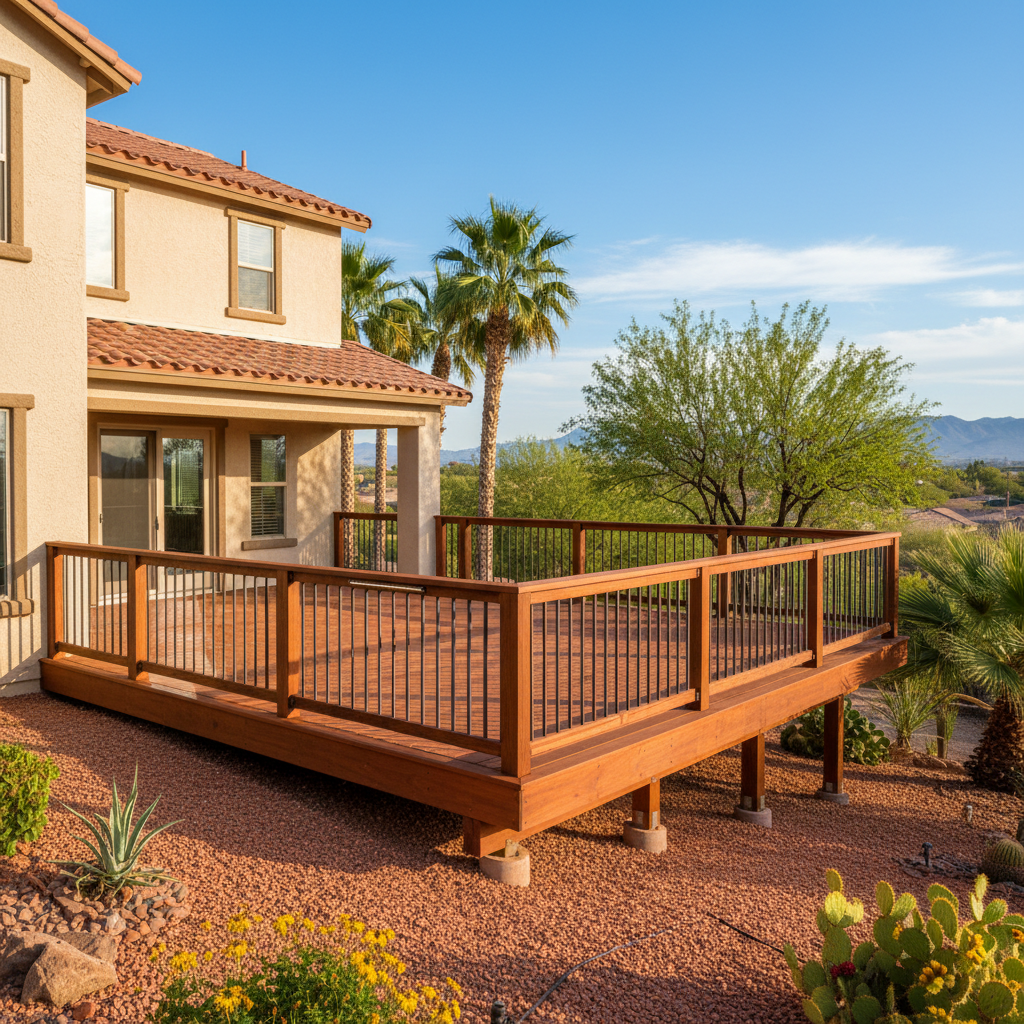
Alright, let's talk deck repair. You've got a deck, it's seen some sun, maybe a few monsoon downpours, and it's probably showing a little wear and tear. The big question I get asked all the time is, 'When's the best time to fix this thing?' And honestly, it's not as simple as just picking a weekend when you're free. Our Glendale climate, you see, plays a huge role in how long those repairs will actually hold up.
Timing Your Deck Repairs: It's All About the Weather
You wouldn't believe how many folks try to get major deck work done in the middle of July. I get it, you want it done, but that's just asking for trouble. The extreme heat here in Glendale, especially when it's hitting 115 degrees, isn't just uncomfortable for us; it's terrible for wood and even some composite materials during the repair process.
Here's the deal: when it's scorching hot, wood expands. If you're trying to replace boards, fix railings, or even just sand and stain, that wood is going to behave differently than it will in cooler temperatures. You might get gaps when things cool down, or finishes won't cure right. Plus, any adhesives or sealants we use have temperature limits. Try applying a sealant when the surface temperature of your deck is 140 degrees, and it's just not going to bond properly. It'll flash off too fast, or it won't penetrate. You'll be calling me back in six months for the same problem, believe me.
So, when's the sweet spot? I always tell people to aim for the cooler, drier months. That means late fall, winter, and early spring. From about October through April, we usually get those ideal conditions. The air is drier, the temperatures are moderate, and materials can cure and settle properly. This is when you'll get the best, most durable results for any significant repair work.
Monsoon Season: A Repair No-Go Zone
Speaking of weather, let's talk about our monsoon season. From late June through September, we get those intense, sudden downpours. Even if it's not raining when we start a job, a surprise thunderstorm can ruin freshly applied stains, sealants, or even compromise structural repairs if wood gets soaked before it's properly secured or protected. You don't want water getting into newly exposed joints or fresh cuts. It's just bad news.
If you've got a deck in an older neighborhood like Yucca District, where some of those homes have original decks that have seen decades of sun and rain, you know what I'm talking about. You want to make sure any repairs are done when the weather's predictable. That means avoiding the monsoon season for anything more than very minor, temporary fixes.
Protecting Your Investment Year-Round: Beyond Repairs
Once your deck is repaired and looking good, you want to keep it that way, right? Year-round maintenance is key, especially with our desert climate trying to beat up everything outside.
- Clean Regularly: Dust, dirt, and pollen build up fast here. A good sweep and occasional wash with a mild cleaner will prevent grime from embedding and wearing down finishes. Don't power wash too aggressively, especially on wood, or you'll damage the fibers.
- Check for Fastener Issues: Our extreme temperature swings can cause wood to expand and contract, which can loosen screws and nails over time. Do a walk-around once or twice a year, especially after summer, and tighten anything that looks wobbly.
- Reapply Sealant/Stain: This is probably the most important thing for wood decks. The sun here is brutal. Even the best stains and sealants will break down. Depending on the product, you'll want to reapply every 1-3 years. If you wait until it looks completely faded and dry, you've waited too long. For composite decks, while they don't need sealing, a good cleaning regimen keeps them looking new.
- Inspect for Damage: After any big storm, check for loose boards, splinters, or any signs of insect activity. Catching small problems early prevents them from becoming big, expensive ones.
Look, your deck is an extension of your home, and it's an investment. Doing repairs at the right time, when the weather's cooperating, makes a huge difference in how long those fixes last. And with Glendale Custom Decks, we always factor in our local climate when we're planning your project. We want your deck to stand strong and look great for years to come, not just until the next summer hits.