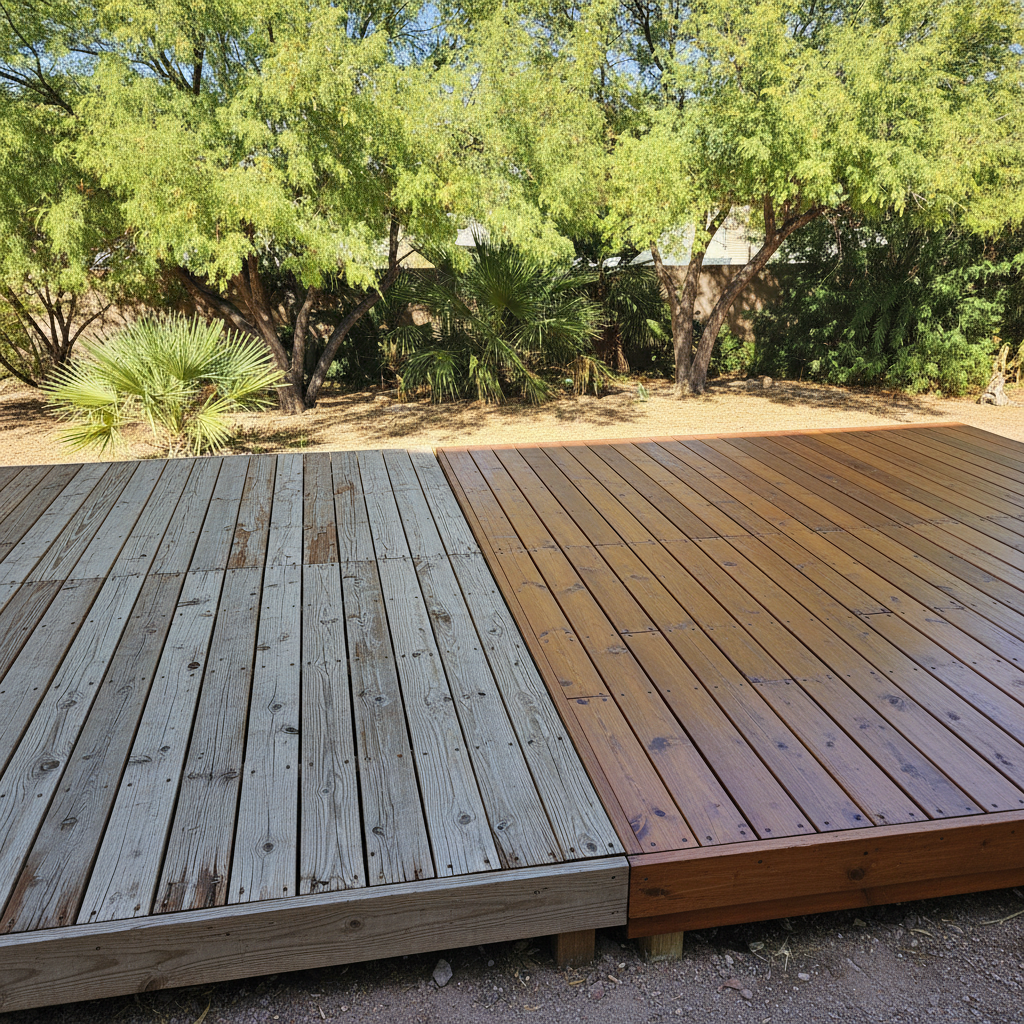
Your deck's seen better days, huh? Maybe a few boards are rotting, or the whole thing just looks tired. You're probably wondering if you can just patch up the bad spots or if you need to go bigger. It's a common question I get here in Glendale, especially with our intense sun and monsoon rains doing a number on outdoor structures.
Spot Repair: The Quick Fix
Alright, let's talk about just fixing the problem areas. This is what most folks think of first when they hear 'deck repair.' You've got a couple of warped boards, maybe a splintered one, or a few posts that are wobbly. The idea here is simple: replace only what's broken.
Cost: This is usually the cheapest option upfront. You're buying less material, and labor time is shorter. If it's just a handful of boards, you might be looking at a few hundred bucks, depending on the material and how accessible the damage is. If you're handy, you might even tackle it yourself, saving on labor.
Durability: This is where it gets tricky. If the underlying frame is solid and the damage is truly isolated, a spot repair can hold up fine. But often, those 'isolated' problems are symptoms of a larger issue, like inadequate drainage or general aging. You fix one spot, and another pops up a year later. It's like playing whack-a-mole sometimes.
Maintenance: You'll still need to maintain the whole deck, including the new patches. The new boards might not match the old ones exactly, especially if your deck has faded over time. You'll need to stain or paint everything to get it looking uniform, which can be a pain if you're trying to blend new wood with old.
Appearance: Unless you're replacing with identical, perfectly aged material and then restaining the entire deck, it's tough to make a spot repair invisible. You'll often see mismatched boards, different shades of stain, or varying wear patterns. It can look a bit Frankenstein-ish if not done carefully.
Full Deck Resurfacing: A Fresh Start
Now, resurfacing is a different beast. This means we keep your existing deck frame – the bones of the structure – but we rip up all the old decking boards, railings, and sometimes even the stairs. Then, we install brand new decking material on top of that solid frame.
Cost: This is a bigger investment, no doubt about it. You're buying a lot more material, and there's more labor involved in removing the old stuff and installing the new. However, it's significantly less expensive than building a brand-new deck from scratch because you're reusing the most expensive part – the foundation and framing. Think thousands, not hundreds, but it adds serious value.
Durability: This is where resurfacing really shines, especially in a place like Glendale. You're starting fresh with new, often higher-quality materials. If you go with composite decking, for example, you're getting something designed to withstand our intense UV rays and temperature swings much better than traditional wood. You won't have to worry about rot or splinters for a long, long time. We've seen plenty of older decks in neighborhoods like Arrowhead Ranch where the frame is still perfectly sound, but the wood decking is just beat. Resurfacing gives that structure new life.
Maintenance: Huge win here. If you choose a composite material like Trex or AZEK, maintenance drops dramatically. No more sanding, staining, or painting every couple of years. Just a good cleaning now and then. Even with new wood, you're starting with a fresh slate, so your initial maintenance will be more effective and last longer.
Appearance: You get a brand-new deck look. Period. Uniform color, consistent texture, and modern aesthetics. You can change the color, upgrade to hidden fasteners for a cleaner look, and really transform your outdoor living space. It's a complete refresh that boosts your home's curb appeal and your enjoyment of the space.
My Recommendation for Glendale Homeowners
Look, if you've got one or two truly isolated issues on an otherwise solid, relatively new deck, a spot repair might make sense. But honestly, in my experience with Glendale Custom Decks, that's rarely the case. Most of the time, by the time you're seeing significant damage, the whole deck surface is showing its age.
For most homeowners in Glendale, I'm going to lean towards full deck resurfacing. Here's why:
- Our sun is brutal. It breaks down finishes and wood fibers relentlessly.
- Our monsoon season brings moisture and humidity that can accelerate rot and warping.
- The cost savings of a spot repair are often eaten up by repeated repairs and ongoing maintenance.
- The long-term durability and drastically reduced maintenance of a resurfaced deck, especially with composite materials, just make more sense for our climate.
You get a practically new deck that will last for decades with minimal fuss. It's a better investment in the long run, and you'll actually enjoy your outdoor space more instead of constantly worrying about fixing it. Give us a call at Glendale Custom Decks if you want to talk through your options. We can come out, inspect your frame, and give you an honest assessment of what's going to work best for your home and your budget.