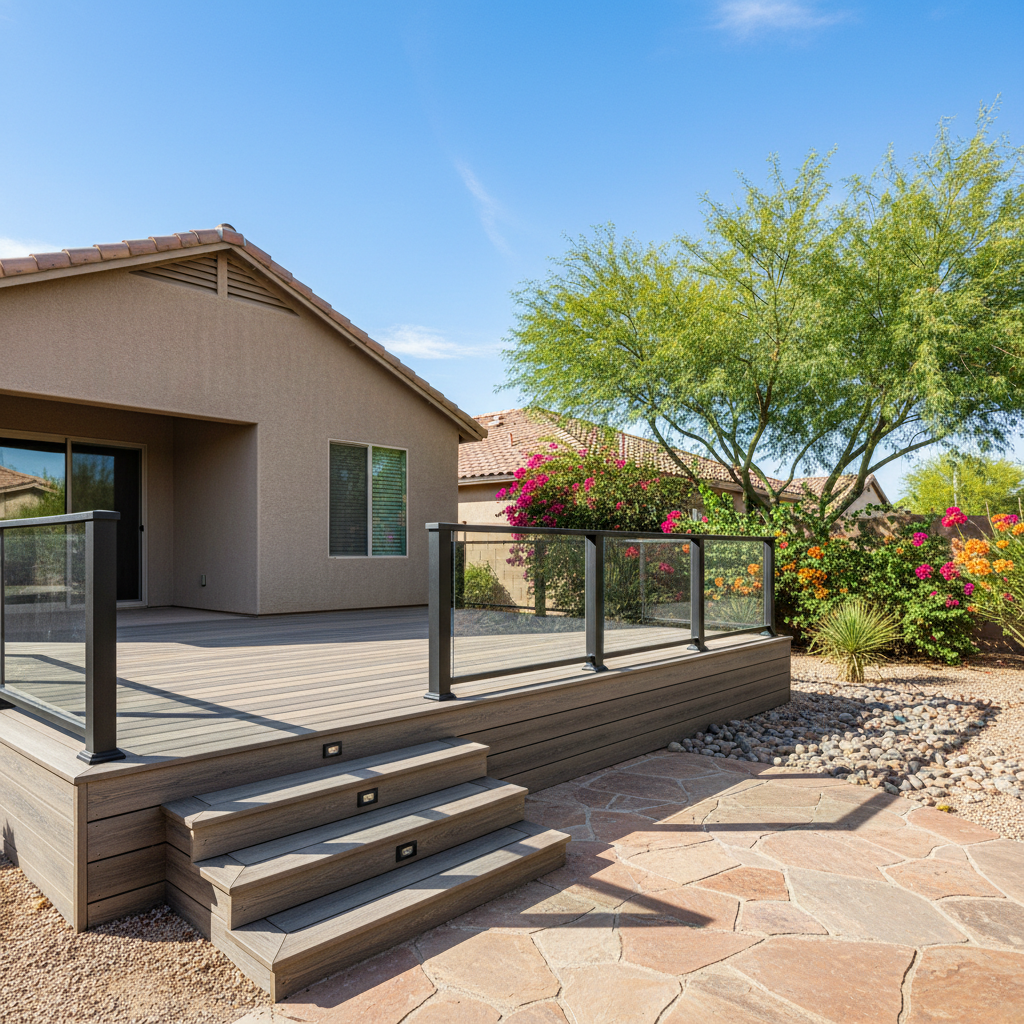
When's the best time to get work done on your composite deck here in Glendale, and how do you keep it looking good all year long? I get asked this a lot, and it's a smart question. People often think composite means 'no maintenance,' but that's not entirely true, especially with our Arizona climate trying its best to bake everything. Believe me, it tries.
Scheduling Your Composite Deck Project in Glendale
You're thinking about a new composite deck, or maybe adding onto an existing one. That's great! But timing is everything, particularly when you're dealing with materials that react to heat and cold. For us, the sweet spot for building a new composite deck, or doing any major repairs, is usually late fall through early spring. Think October through March.
Why then? Well, first off, it's just plain more comfortable for my crew and me. Trying to lay decking in 115-degree heat? It's brutal, and it slows us down. More importantly, composite materials expand and contract with temperature changes. When we install composite decking in cooler weather, it's less likely to buckle or gap excessively when the summer heat hits. We can set the gaps correctly without worrying about extreme expansion right after installation. If you install it in July, those boards are already expanded to their max. When winter comes, they'll contract, and you might see bigger gaps than you'd like.
Plus, the ground here in Glendale, especially in areas with a lot of caliche, can be a real bear to dig in during the summer. It's like concrete. Cooler temps make post-hole digging a little less of a nightmare, which means we can work more efficiently and get your project done faster.
Weather Conditions That Affect Composite Deck Work
Our desert weather is pretty predictable, but a few things can throw a wrench in the works. Extreme heat, like I mentioned, is a big one. Not only for the crew, but for the material itself. Working with hot composite boards can be tricky; they're more flexible and sometimes harder to cut cleanly. We can do it, but it takes more care.
Then there's the monsoon season. You know how it is: clear skies one minute, then a sudden downpour and crazy winds. We can't really work on an exposed deck during a heavy rainstorm, obviously. It's a safety issue, and it's just not practical. High winds can also be a problem, especially if we're working on railings or any kind of overhead structure like a pergola that's part of the deck. We've had some dust storms blow through that can shut down a job site for a few hours. We always keep an eye on the forecast, but sometimes Mother Nature just does her own thing.
Humidity isn't usually a huge factor for composite decks here, because we're so dry most of the year. But during the monsoons, if it's really humid and we're working with fasteners, we just make sure everything is sealed up right to prevent any moisture issues down the line.
Protecting Your Composite Deck Year-Round
Alright, so you've got your beautiful composite deck from Glendale Custom Decks. Now, how do you keep it looking sharp through our scorching summers and mild winters?
- Summer Sun Protection: This is the big one. Our UV rays are intense. While composite decks are designed to resist fading, direct, unrelenting sun can still take a toll over years. The best protection? Shade. Consider a pergola, sail shades, or even strategically placed large potted plants. Keep your deck clean, too. Dirt and debris can trap heat and moisture, which isn't good. A simple sweep and occasional rinse with a hose is usually all it takes. For stubborn spots, a soft brush and mild soap work wonders.
- Monsoon Season Prep: Before the summer storms hit, make sure your deck is clear of anything that can blow away or cause damage. Secure outdoor furniture. Check that your gutters are clean and draining away from your deck, not onto it. Standing water isn't good for any deck, even composite. While composite won't rot, prolonged standing water can lead to mildew growth or leave unsightly water spots.
- Fall & Winter Maintenance: These are your easiest seasons. Give the deck a good cleaning after the summer dust and grime. Check for any loose fasteners or minor damage that might have occurred during the hotter months. It's also a great time to clean under the deck, removing any leaves or debris that might have accumulated. This keeps pests away and ensures good airflow.
- Regular Inspections: I always tell folks to just walk around your deck once a month. Look for anything out of the ordinary. Are there any scratches? Is anything loose? Catching small issues early prevents them from becoming big, expensive problems.
Composite decks are a fantastic choice for Glendale because they're tough and handle our extreme temperatures better than wood in many ways. But 'low maintenance' doesn't mean 'no maintenance.' A little seasonal attention goes a long way in making sure your outdoor living space stays beautiful and lasts for years.